The manner of passing through this mountain was very surprising to me. I had never read or heard anything about such a passage before. At first, I thought that it might have been a work made by the ancient Romans, because the construction looked strong and carefully designed. However, I was later informed that it was built much later, and not in Roman times. In earlier days, there was no direct passage into Carniola by this route, and travellers were forced to go around by the town of Villach, which made the journey longer and more difficult Stay and Kind Hospitality.
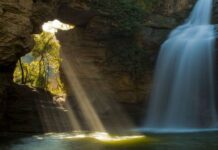
When I first saw the opening in the mountain from far below, I guessed that it might be the dwelling or chapel of some hermit living alone in the hills. I could not imagine how anyone could reach such a place because it seemed high and hidden among the rocks. But as we continued to travel and followed the winding road up the hill, my doubts were removed. In time, I not only passed through the opening myself, but I also met several travellers who were coming out of Carniola. The passage was so well made that even country carriages and carts could pass through it daily, which showed how useful and carefully planned it was.
Difficult Weather During the Ascent
While we were climbing the mountain, we experienced very bad weather. There was heavy rain, strong hail, and snow lying on the sides of the road. Because we were so high up during the storm, I had a rare chance to observe the movement of the clouds. I saw them descend down the mountain and then rise again after the storm had passed. It was a remarkable sight to watch the clouds move so close to us Turkey Tour Guide.
At one moment, a stream of clouds passed directly through the mountain passage, moving from Carniola into Carinthia. This was opposite to our direction, as we were travelling out of Carinthia and into Carniola, or as the Germans say, from Kärnten into Krain. The natural scene was both grand and strange, and it made a deep impression on my mind.
Care and Labour to Maintain the Road
This noble passage through the mountain was already so well constructed that it could continue to be used for many years. The people of the region are known to be hardworking and industrious. During the winter, they remove the snow from the road with great effort so that travellers may still pass safely. Their labour keeps the way open even in harsh conditions.
As we continued to climb, the road gradually led us to the grotto or tunnel in the mountain. Once we had passed through it, our journey changed from climbing to descending. The path downward was steady and long, making the travel easier after the difficult ascent.
Descent Toward the Towns of Carniola
After passing through the grotto, we first arrived at a place called St. Jinna, about two English miles down the mountain. From there, we continued further downward to a settlement called Newstatt, about a German mile and a half farther along the descending road. The landscape slowly changed from rough mountains to more open and gentle ground.
We then proceeded until we came to the town of Kranj, which is thought by some to have been the ancient Carnodunum. It is a good and well-situated town, standing near the River Savus, now known as the Sava River. The town’s position near the river makes it an important place for travel and trade.
Arrival at the Chief City of Carniola
From Kranj, we travelled across a fair and wide plain that stretched for about four German miles. The journey across this plain was pleasant after the hardships of the mountains. At last, we reached the city of Ljubljana, which was then called Labach or Lubiana and was the chief city of Carniola. The city appeared lively and well placed, serving as an important centre for the region and a fitting end to our difficult yet memorable passage through the mountains.