During my stay in the town, I was treated with great kindness and respect. I was often invited to dine at the table of noble persons, and they showed me much friendship. One day, my Lord Lesley took me in his barge through a handsome straight canal that was cut into the Wörther Sea, also called the Lake of Klagenfurt. The journey by water was very pleasant and allowed me to see the beauty of the lake and the surrounding land Turkey Sightseeing Tours.
We travelled to a delightful house of pleasure called Loretto, which was very finely situated. The place had a small chapel that was built in the same style as the famous sanctuary of Loreto Shrine in Italy. Since I had seen the original chapel before, I was able to confirm that this one was made as a very exact imitation. The design, structure, and arrangement closely followed the Italian model, which showed the care and devotion of those who built it.
Letters of Recommendation and Reputation
Count Lesley, who was a noble and generous man, was related to the famous general Raimondo Montecuccoli. Because of his kindness, he was pleased to give me letters of recommendation to Vienna and to other important places. These letters were of great help for my future travels.
My acquaintance with the Right Honourable Henry Howard, 6th Duke of Norfolk also increased the warm reception I received. His respected name was well known not only in the dominions of the Empire but also later in Turkey. This showed how widely his reputation had spread across Europe and beyond Roman Inscription and Ancient Objects.
Leaving Klagenfurt and Crossing the River Dravus
After leaving Klagenfurt, I continued my journey southward. After travelling about a German mile and a half, I came to the River Dravus, which is now known as the Drava River. At this place, the river was already large and very swift. I crossed it by passing over two long wooden bridges, with a small island lying in the middle of the stream. The crossing was safe but impressive because of the strong current and the length of the bridges.
Entering the Hills and the Iron Works
After one or two hours of travel, I began to enter a region between hills at a place called the Hammer. Here, iron was beaten and shaped, showing that the area had active metal work and industry. The sound of the ironworks and the sight of workers at their labour gave the place a lively but rugged character. From there, I continued my journey in order to pass over Mount Lutbel.
A Wild Desert of Rocks and Waterfalls
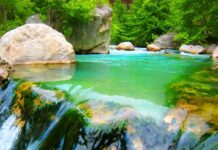
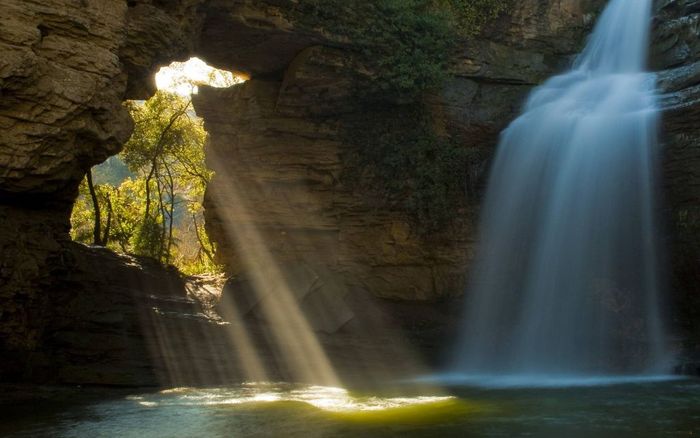
Soon we entered a very strange and wild landscape that looked like a desert of rocks. It was one of the most unusual scenes I had ever seen. There was a great waterfall, and the force of the water had worn and shaped the rocks in such a way that they appeared almost artificial. Nature itself seemed to have carved the stone with great skill.
The road going upward was carefully made with strong walls. It turned backward and forward along the mountain with much labour and clever design. I was surprised to see such careful engineering in this region. The path wound again and again until we reached the highest passage of the great mountain called Lutbel, which forms part of the Carnic Alps and divides Carinthia from Carniola.
The Mountain Passage Through the Rock
This mountain was one of the most remarkable I had ever seen. After climbing as high as the steep rocks and sharp peaks allowed, we turned sideways along a constructed path. This path led us into a tunnel cut directly through the mountain itself. The passage reminded me of the famous grotto near Naples, though this one was built in a simpler way.
Inside the passage, there was a wooden roof in the middle, which continued all the way to the Carniola side. The roof was high, and the tunnel measured about 156 yards in length and four yards in width. The construction of such a passage through solid rock showed great effort, skill, and determination, and it made the crossing of the mountain both safer and more manageable for travellers.